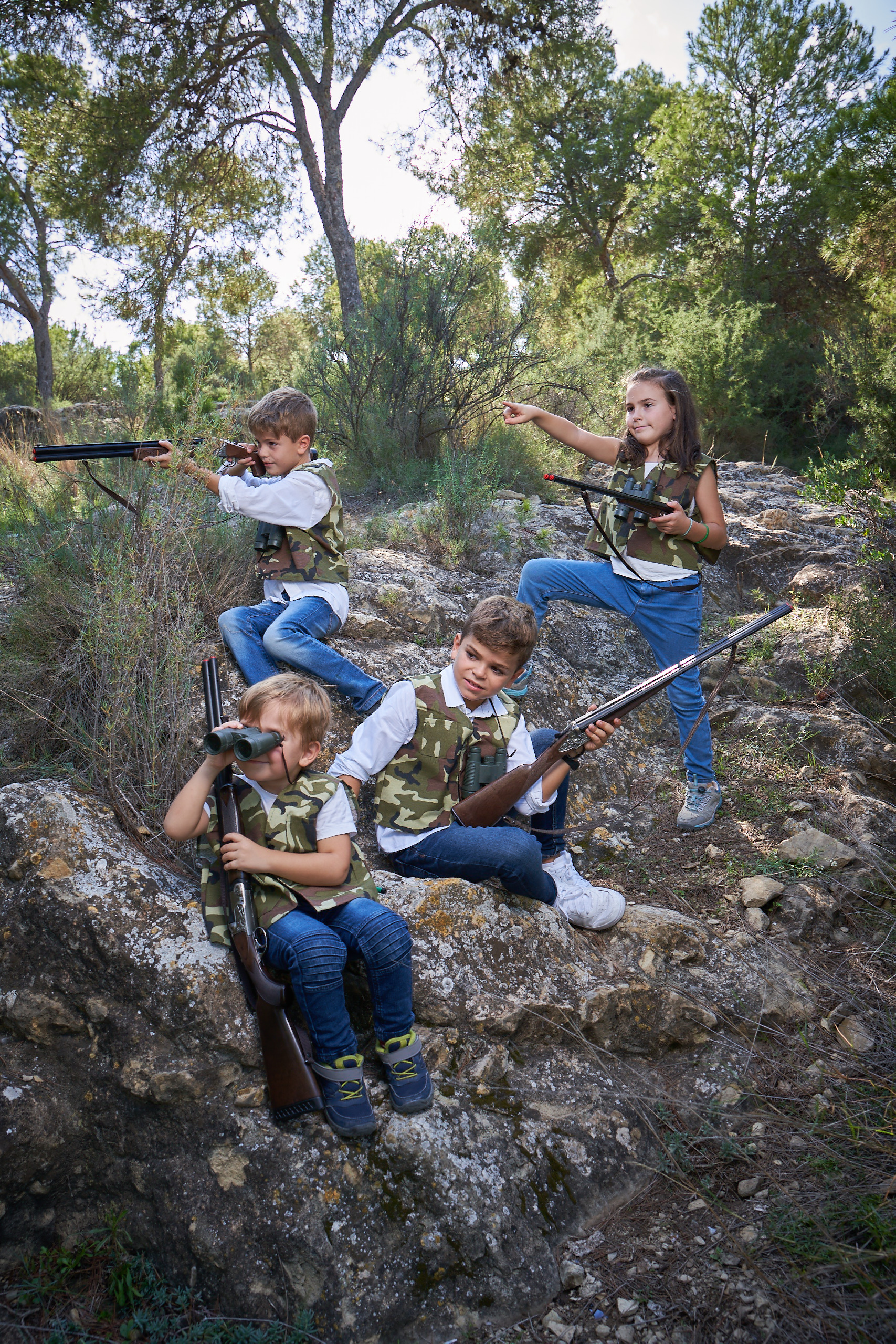
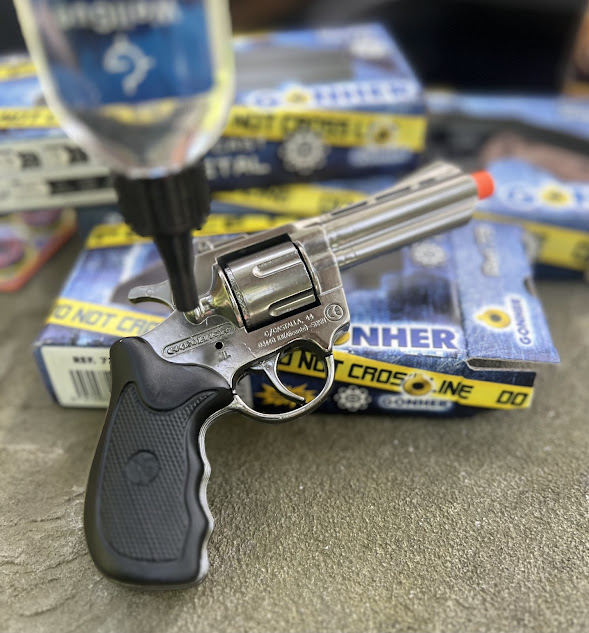
The most important rule for cap gun safety is treating these toys with the same thoughtfulness as you would real firearms. This approach prevents accidents and builds good safety habits that apply to all types of firearms, real or replica.
1. Wear Hearing Protection
Cap guns typically produce a sound level of around 105-110 decibels (dB) which is ear-safe. This is regulated by law. We only sell ear-safe caps. However, you may encounter caps exceeding 120 dB which is loud enough to cause immediate hearing damage. (For comparison, this is louder than a chainsaw or rock concert.) Use common sense playing with cap guns. If the caps you are using seem excessively loud, err on the side of caution and use ear protection. Caps that are ear-safe outdoors may be too loud in confined spaces (indoors) were their decibel level is magnified. Never fire a cap close to anyone’s head!
- Use ear protection: Foam earplugs or over-ear protection reduce noise exposure.
- Consider the environment: Indoor use amplifies sound more than outdoor use. Distance effects perceived decibel level.
- Protect children especially: Young ears are more sensitive to loud noises.
2. Practice Proper Trigger Discipline and Muzzle Control
Trigger discipline means keeping your finger off the trigger and outside the triggerguard until you are ready to fire. Doing this will dramatically reduce the number of accidental discharges.
Muzzle control means always being aware of where the barrel points. This fundamental rule of safe firearms handling applies whether the firearm is real or a toy. The barrel should never be pointed at people, animals, or property that isn’t an intended target.
Safe firearm handling requires keeping the muzzle be pointed in a safe direction at all times, typically toward the ground, the sky, or a designated safe area. While cap guns don’t fire projectiles and present no danger in that respect, using play to develop safe gun handing habits can reduce the frequency of accidental shootings if the child ever comes into unsupervised contact with real firearms. ( ex. Finding a captured pistol in grandfather’s army footlocker while exploring the attic.)
3. Keep Caps and Guns Separate When Not in Use
Safe firearms storage habits help prevent accidents. The danger of an unsupervised child lacking gun safety knowledge discovering a loaded cap gun is a far cry from the threat of discovering a real firearm, but storing guns and ammunition separately is a good habit to develop to protect both children and adults.
Caps contain small amounts of explosive material which is flammable and can deteriorate over time or become unstable if exposed to heat or moisture. Store caps in their original packaging (and/or a sealed Zip-Lok type plastic bag), in a cool, dry location away from heat sources like radiators, direct sunlight, or car interiors. Remove any unused caps from the cap gun before putting it away.
4. Use Supervision and Clear Boundaries
Adult supervision is particularly important for children under eight years old. Clear rules about where and when cap guns can be used help prevent misunderstandings and unsafe situations. Some cap guns can look very realistic and in the wrong context might be confused with real firearms by other children, adults or law enforcement.
Appropriate locations for cap gun use include private backyards, designated play areas, or controlled environments like theater rehearsals. Avoid using cap guns in public spaces, near schools, or anywhere they might be mistaken for real weapons. (ex. Children should be instructed not to brandish cap guns in or around retail stores or their parking lots.)